
Simple locates, $200–$400
Short runs, decent access, leak confirmed and marked without drama.
A leak you cannot see is still on the meter, still under the slab, still soaking the wall cavity. We find them with listening gear, thermal imaging and pressure testing, so the repair needs one small hole in the right place, not three big ones in guesses.
A concealed leak cannot keep all three of its secrets. It makes a sound, pressurised water escaping sings in frequencies acoustic gear tracks along the pipe. It changes temperature, the wet path, or the warm plume of a leaking hot line, paints itself across thermal imaging. And it loses pressure, isolate the pipework section by section against a gauge, and the guilty run confesses while the innocent ones hold steady.
One signal narrows it; three signals convict. Where the readings intersect we mark the surface, and that mark is routinely metres from where instinct says to dig, especially under Pymble’s renovated homes, where pipe runs wander in ways no drawing ever recorded. Every centimetre of accuracy is a tile that stays on the floor.


On a property running tank water, a supply leak shows up as consumption rather than as water, a tank dropping faster than the household explains, or a pump cycling when nothing is being used.
Homes set well back from the road run lengthy drains that trap debris and are slow to clear without proper jetting gear.
A pump that starts periodically with every tap closed is the clearest leak indicator there is on a rural property, and it is worth acting on immediately. It means the system is losing pressure somewhere continuously.
Older houses have rising damp, failed flashings, blocked subfloor vents and perished mortar, all of which produce symptoms that look exactly like a leak.
Early-1900s homes still run original earthenware sewers that crack and sag with age, snagging waste and backing up.
Establishing which one you have is worth doing before any pipe is repaired. A moisture profile that peaks at floor level and falls with height points at rising damp; one that peaks at a fixture or a pipe run points at plumbing.
Big eucalypts and established gardens send roots deep into long clay sewer runs, making root blockages the number-one problem across Pymble.
A persistent sewer smell around a property with no obvious source is worth investigating properly. It usually means either a dry or failed trap, or a break in a line venting where it should not.
A smoke test finds both quickly, introduce smoke into the system and watch where it emerges. It is unglamorous, cheap, and conclusive in a way that sniffing around is not.
Pymble sits on Sydney’s Upper North Shore in leafy Ku-ring-gai (postcode 2073), on large tree-filled blocks bordering Gordon, West Pymble, St Ives and Turramurra. Big gardens, towering eucalypts and long private drain lines shape almost every blockage we clear here.
Rural properties have far more plumbing outside the house than in it: irrigation, troughs, garden lines, a shed, sometimes a second dwelling. Any of it can leak, and most of it is old.
Detection here starts by isolating the property into sections and eliminating them one at a time. It is methodical rather than clever, and it is the only approach that does not end in guesswork.
Lath and plaster, pressed metal ceilings, original tiling and heritage listings all raise the cost of being wrong. In a period home the value of precise location is not the plumbing saved, it is the finishes not destroyed.
So we locate to the smallest area the equipment will support, and where a listing is in play we document what we propose to open before anything is touched.
Not every escape of water is under pressure. A cracked drain leaks into the ground continuously without affecting the meter, without a pressure drop, and often without a single symptom inside the house.
The distinction decides the method. Pressure leaks are found with acoustics and the meter; drain faults are found with a camera and, where needed, a smoke or dye test.
Short runs, decent access, leak confirmed and marked without drama.
First hour with the full instrument kit, acoustic, thermal, pressure, on a typical concealed leak.
Beyond the first hour: extended runs, tight access, multiple suspects to eliminate.
Deep slab lines and multi-storey mysteries at the top of Sydney's range.
Priced off exactly what the detection proved, fixed before it starts, same crew, same visit, no second call-out.
The comparison to hold onto: exploratory demolition costs more than detection before its first guess is even wrong. Figures here are indicative of the 2026 Sydney market rather than a quote from us, you get your own number as a fixed price before any work starts.

Meter protocol, bills, history. If the evidence says no supply leak, you hear that for free, not a finding fee for nothing.
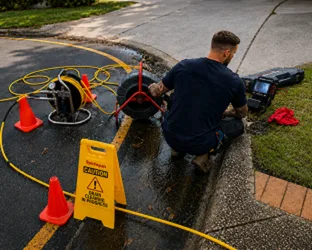
Section-by-section pressure isolation, hot against cold, run against run, until exactly one line owns the loss.

Thermal and acoustic sweeps along the guilty run until the signals stack on one spot. That mark is where, and only where, we open.

Access at the mark, section repaired, pressure re-tested, surface closed. A run in terminal condition gets reroute numbers before, not after.
Then it is real, running, and billing you daily. Detection this week beats discovery through a ruined floor next month.
Instruments, evidence, one precise repair: and a bill that goes back to normal.

Leave your details and our local Pymble team will call you back fast.